
 WON TON
 : A CAT TALE TOLD IN HAIKU by Lee Wardlaw, illustrated by Eugene Yelchin (Henry Holt)
 All right. So far in the past year or so I've seen GUYKU , DOGKU
 , WABI SABI
 and THE HOUND DOG'S HAIKU
 , and the hard-to-find A CAT NAMED HAIKU
 , and I like checking book reviews on EmilyReads (try that for a book report!), all amicable thematic treatments of the 5-7-5 poetic syllabic form that is haiku, but plentiful offerings all the same, so I hope you will excuse me if I wondered if this latest had anything new and worthwhile to add. Mee-wow, what sets this one apart is its lovely story arc, as a mysterious Siamese is adopted from an animal shelter and undergoes the indignity of being named:
, DOGKU, WABI SABI and THE HOUND DOG'S HAIKU, and the hard-to-find A CAT NAMED HAIKU, and I like checking book reviews on EmilyReads (try that for a book report!), all amicable thematic treatments of the 5-7-5 poetic syllabic form that is haiku, but plentiful offerings all the same, so I hope you will excuse me if I wondered if this latest had anything new and worthwhile to add. Mee-wow, what sets this one apart is its lovely story arc, as a mysterious Siamese is adopted from an animal shelter and undergoes the indignity of being named:Won Ton? How can I
be soup? Some day, I'll tell you
my real name. Maybe.
After this feline stretches and claws his way most fetchingly across the pages, deciding inconstantly whether to be in and out of dresses (or yards or cars or under the couch), leaving presents in shoes and finding resting places in socks and on tummies, the pet's real name is revealed; one we should have guessed all along. In a few short pages and in shorter lines, the author and illustrator conspire to create a strong characterization of what starts out as a cat and ends as a member of the family. By the last page, this pet is bonded both to his owner and to us, his readers. What started out as "not another cat book!" ended with "this is not just another cat book," a unique addition to a collection and an excellent storytime read-aloud to boot. (6 and up)
 With the plethora of haiku books available and the propensity for teachers to let students try the format on for size, please also do consider sharing Demi's biographical picture book GRASS SANDALS: THE TRAVELS OF BASHO
 , and COOL MELONS, TURN TO FROGS! THE LIFE AND POEMS OF ISSA
  by Matthew Golub, illustrated by Kazuko Stone (more of Issa's poems in TODAY AND TODAY
 illustrated by G. Brian Karas), lest we forget that the format, while short, is far from flippant, requiring a concerted attunement to nature and a thoughtful economy of words that represents real craft.
 Also of interest:
Remember, every month can be poetry month! Here are more excellent poetry books with a sense of play. LEMONADE AND OTHER POEMS SQUEEZED FROM A SINGLE WORD
 by Bob Raczka, illustrated by Nancy Doniger (Roaring Brook)
This book promises "part anagram, part rebus, part riddle," and delivers, by inventively rearranging letters from one potent word to create a whole poem:
"Moonlight"
hot
night
thin
light
moth
in
motion
or how about "Spaghetti?"
papa
has
a
pasta
appetite
he
eats
heaps
Wait, wait, one more! "Television!"
set
is
on
I
sit
 Each page depicts the letters falling down the page a la cousin to the concrete poem (see Paul Janeczko's A POKE IN THE I
  for more on that), inviting the reader to decode the clever text which is clearly revealed with minimalist force on the following page. Not since the board game Scrabble or Marilyn Singer's MIRROR MIRROR: A BOOK OF REVERSIBLE VERSE has there been such a fresh squeeze
 on language, and with over twenty examples, how can we resist trying our own? Maybe using the word "September" for a first day start? Or "Homework?" (All right, maybe not homework.) (7 and up)
 A LITTLE BITTY MAN AND OTHER POEMS FOR THE VERY YOUNG
 by Halfdan Rasmussen, illustrated by Kevin Hawkes (Candlewick) Published post-mortem by the award-winning Danish children's poet, how can I not recommend a book of verse with the kind of joyful lilt that I imagine would have been right at home in Margaret Wise Brown's classroom collection? A bit more fanciful, though...for example, "The Elf":
The elf puts on his winter coat
and puts his winter hat on,
finds a muffler for his throat
in his drawer--puts that on,
packs his pockets full of mice
and then, before he goes,
puts on a empty ice-cream cone
to insulate his nose.
and lines from the title poem, "A Little Bitty Man":
The little bitty man
bought a little bitty house
for a little bit of little bitty money.
The little bitty lady
grew very, very big
with a little bitty baby in her tummy.
 Hawkes' illustrations, wonderful and jocular as ever (WESLANDIA
 , LIBRARY LION), might unfortunately be just a wee bit visually small and detailed to be considered a perfect developmental match for "the very young" to which the book is ascribed (see Polly Dunbar's broader strokes and bigger pages in Jane Yolen's HERE'S A LITTLE POEM: A VERY FIRST BOOK OF POETRY
 to know what I mean), but this book still is perfectly endearing on its own terms. It offers invigoration to a tired nursery rhyme repertoire, works well for laptime, and has both a visual and verbal humor throughout with room to grow into, even if you are an itty bitty boy or girl. (3 and up)
 LIKE PICKLE JUICE ON A COOKIE
 by Julie Sternberg, illustrated by Matthew Cordell (Amulet)
When Bibi the babysitter has to move away from her job in order to care for her ailing father in Florida, it represents a major loss for Eleanor, who has counted on her all her life. Starting a school year and transitioning into many more new relationships is part of growing up, Eleanor discovers, as is letting go...at least a little bit. Cordell, (no relation and with an "R" in his name) is always an illustrator to watch, and uses line drawings as direct as Eleanor's emotions. There is a clarity and honesty in everything about this book, and children, even if the situation is not one they share, will appreciate the gravity with which Eleanor's situation is treated, and the high note of hope on which the story ends.. Meanwhile,we in the market can appreciate a thematically-appropriate tome for pre-teen readers (thank you very much, more, please!).
Okay, here's what I don't exactly "get." My brilliant high school English teacher advised us once that good prose should read in parts like poetry, as if it could be broken down into lines. There are a lot of narratives that are formatted into lines of poetry (REACHING FOR THE SUN
 , JAKE AND MINN
 ), and LIKE PICKLE JUICE, too, is one. My question is, if my English teacher was right (as she has always been so far), then why? Why don't the authors just tell a prosaic tale with lines that read like poetry? When is a realistic story suddenly compelled into the arrangement of free verse? Is it just a feeling? What would be lost by more conventional structure on a page? What makes poetry poetry? Perhaps there is no right answer, but that, mes amis, is a worthwhile discussion... another teachable moment offered by this sensitive book. (8 and up)
Links are provided for informational use. Don't forget to support your local bookseller.
More Esmé stuff at www.planetesme.com.


 by Nicola Winstanley, illustrated by Janice Nadeau (Kids Can Press)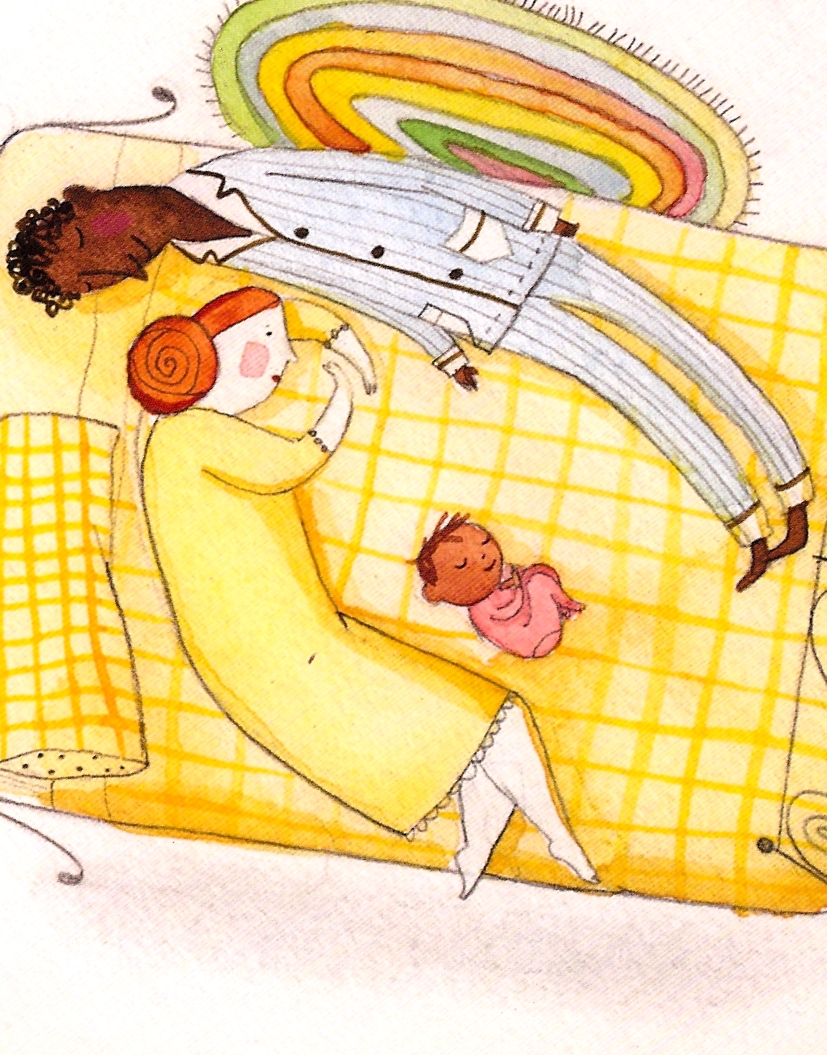


 THE BAKE SHOP GHOST by Jacqueline Ogburn, illustrated by Marjorie A. Priceman (Houghton Mifflin)
 QUEEN OF THE FALLS by Chris Van Allsburg (Houghton Mifflin)
 and
and does not churn them out, but rather, delivers a gem every few years. In a departure from his usual fantastical fare, Van Allsburg turns his attention to a biographical story in which truth is stranger than fiction. In 1901, Annie Edison Taylor, a 62-year-old marm at a charm school, found her financial resources depleting and without any prospects for her old age. Fearing the poorhouse, she devises a daredevil stunt that verged on madness: to be the first to go over the drop of Niagara Falls in a barrel of her own special design, and then reap the benefits of subsequent fame on a tour circuit. But between nefarious managers and onlookers who are disappointed that Annie is more grandma than glamor-girl, the bumpy trip down the mountain of water is not all Annie will have to survive.


 by Candace Fleming, illustrated by Anne Wilsdorf (Farrar Straus Giroux)
 FLESH & BLOOD SO CHEAP: THE TRIANGLE FIRE AND ITS LEGACY by Albert Marrin (Knopf, 2011)


 by Elizabeth Winthrop (Dell Yearling).

 by Russell Freedman (Clarion) and
  by Susan Campbell Bartoletti (Houghton Mifflin). And the last great feat of this book is voice, which she has given to this Vermont farmgirl faced with the need to do the right thing in the face of contradictions. If you enjoyed the bold candor of the period writing in Jennifer Holm's
  OUR ONLY MAY AMELIA,
 you will love Grace's genial, colloquial point of view as well. I'm very excited for author Elizabeth Winthrop, who gained acclaim for her unique mix of fantasy and historical fiction (
 ). With over fifty books under her belt, her work is stronger than ever. This is a special contribution to the shelves of children's literature, and offers children a first-person view into history that could have been them, in another place and time. (10 and up)