Monday, July 31, 2006

WHO IS MELVIN BUBBLE? (PICTURE BOOK)

PICTURE BOOK
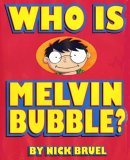
WHO IS MELVIN BUBBLE? by Nick Bruel (Roaring Brook)

Who is Melvin Bubble? Well, it depends on who you ask. His dad might say he's a chip off the ol' block, and his mom might notice he's possibly the messiest boy in the world. His dog might say wood woof arf woof woof bark. A three-eyed monster might say he is dear, sweet, tender and delicious. The meanest man in the world might say he has a silly name. How about a talking rock? Santa Claus? His best friend Jimmy? A zebra? This hilarious book well-matched with cartoonish, coloful illustrations is a belly-shaker as well as an invaluable tool for teaching kids about point of view. By the end, you'll have your own idea about who is Melvin Bubble. And if anyone asks you "who is Nick Bruel?" you'll be able to say: my new favorite author for reluctant readers...and writers! (7 and up)

And if you're not tired out by laughing and want another round with this author, check out BAD KITTY (Roaring Brook). Oh dear, did Mommy forget to buy food for the kitty? No worries, there should be plenty of things in the cupboard for kitty to eat. Asparagus, perhaps? Fennel? Rhubarb? An alphabet of food that sends kitty gagging on hairballs also sends him into an alphabet of bad behavior involving curtains, neckties and a vet's arm. Don't worry, a trip to the store for more suitable cuisine, worthy of Wacky Packages noteriety and a child's taste (lizard lasagne or turtle turnovers, anyone?) should send kitty into a redemptive fervor. That's four, count 'em, four hilarious alphabets in one book. Zany, never dull, and full of a suprising amount of fresh vocabulary and a chance for letter recognition, this book is a hoot for lively, irreverent preschoolers and their older siblings. It reads like catnip for fans of all things feline, but cat-haters can enjoy it, too, as kitty's true nature is revealed. (4 and up)

Also of interest:
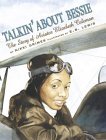
Since I know some of you teachers out there are already getting itchy and jotting down notes for great new lessons come fall, another great book to use for teaching point of view is TALKIN' ABOUT BESSIE: THE STORY OF AVIATOR ELIZABETH COLEMAN by Nikki Grimes, with beautiful watercolor illustrations by E.B. Lewis (Scholastic). Twenty fictionalized eulogies from a diverse collection of people touched by the world's first licensed female African-American pilot creates a resonating portrait. This inspiring and creative teaching tool for point of view can also be a fresh format for kids to report on famous people in history. (7 and up)

Links are provided for informational use. Don't forget to support your local bookseller.

Friday, July 28, 2006

BEACH BLANKET READING #5: TREASURE HUNT!

What better place than the beach to dig for treasure?

After reading HOW I BECAME A PIRATE by Melinda Long and David Shannon, (Harcourt) (5 and up) and ROGER THE JOLLY PIRATE by Brett Helquist (famous illustrator of Lemony Snicket's Series of Unfortunate Events (HarperCollins) (5 and up), divide the kids up into groups and give them each a small box to put something "valuable" in. Then crumple up butcher paper and let each group create their own "treasure map" as they find a hiding place for their booty. Let the groups exchange maps, and let the search begin! If the interest in treasure hunting is piqued, be sure to recommend Betsy Byars' realistic fiction THE SEVEN TREASURE HUNTS (HarperTrophy) (all ages). And if it's treasure ye seek, Walter Wick's eye-candy seek-and-find book I SPY TREAURE HUNT by Jean Marzollo, illustrated by Walter Wick (Cartwheel) (7 and up), which has enough baubles and bangles to tantalize a whole shipload of treasure-seekers!

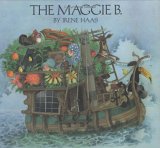
If you would like a gentle wind-down after piratical adventures, try THE MAGGIE B. by Irene Haas (Margaret McElderry), a classic cruise through the imagination of a little girl (ages 4 and up).

Also of interest:
More pirate-themed books to shanghai your child's imagination!
DO PIRATES TAKE BATHS? by Kathy Tucker, illustrated by Nadine Bernard Westcott (Whitman) (4 and up)
PIRATE TREASURE by Loretta Krupinski (Dutton) (5 and up)
OLIVE'S PIRATE PARTY by Roberta Baker, illustrated by Debbie Tilley (Little, Brown) (5 and up)
THE GREAT PIRATE ACTIVITY BOOK by Deri Robins, illustrated by George Buchanan(Kingfisher) (9 and up)
EVERYTHING I KNOW ABOUT PIRATES by Tom Lichtenheld (Simon and Schuster) (6 and up)
HENRY AND THE BUCCANEER BUNNIES by Carolyn Crimi, illustrated by John Manders (Candlewick) (5 and up)
And many will be happy to know that the latest in the popular "ology" series has been released, PIRATEOLOGY edited by Dugald A. Steer (Candlewick), a work of nonfiction that holds kid-treasure better than gold: working compass, pocket sundial, jewels and gems, and maps leading to what else but more treasure? If you enjoy this book, you will also enjoy the scrapbook style PIRATES by John Matthews (Atheneum), full of even more maps, historical facts, and a wanted poster for none other than Blackbeard himself. Both are best suited for children ages 9 and up.

You can knock the sand out of your shoes...this concludes our week at the beach at PlanetEsme! Hope you had a sunny time, and found reading treasures to boot. We will return next week to our regularly scheduled program: reviews of the best brand new books!

On a personal note
I was a little later than usual posting for Book-a-Day today, because I had to prioritize going over the final, final, FINAL proofs of my new novel, VIVE LA PARIS, with my editor. It occured to me that it felt like little bit like working under a car for a very important customer, making sure every nut and bolt and spring is tightened and oiled, that the fenders are gleaming...so many miniscule adjustments! I am so excited, and hopeful that this book is the very best it can be. I have come to really love my main character Paris and her family, and I hope you will, too! I also hope this will be a useful tool for discussions about peace and bullying...but more on that later!

Many of you have gotten a sneak preview with the Round Robin promotion that was announced last month. I have my fingers crossed that you liked what you read, and thank you with all my heart to those who have spread the word! If you signed up for the Round Robin and have not yet recieved the book, please let me know via my e-mail, esmeatripcodotcom. Merci beaucoup!

Links are provided for informational use. Don't forget to
support your local bookseller.

Thursday, July 27, 2006

BEACH BLANKET READING #4: MAKE YOUR OWN MERMAID

Back to the beach! Today let's celebrate the not-so-chicken of the sea: mermaids!

If you have real sand to play with, half bury the children and let them form fishtails from the waist down; let them decorate in patterns using shells and stones. If you happen to be on an imaginary beach, from the waist down, wrap the child's legs loosely in blue or green cellophane (Saran Wrap comes in pretty colors these days). Once the form is made, if you are generous enough with the cellophane,the child should be able to slip in and out of their "tails." Fashion fins at the bottom out of a fan, a plastic plate or more cellophane. Let thechildren decorate the tail by attaching seaworthy decorations, like strings of deep-sea pearls, glitter-covered shells and leafy seaweed.

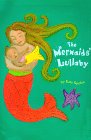
Are mermaids extinct? They are definitely at least endangered in the world of picture books and folklore collections. My own favorite mermaid story is the unusual japanese legend "The Kingdom Under the Sea" retold in MAGICAL TALES FROM MANY LANDS by Margaret Mayo, illustrated by Jane Ray (Dutton), which is crazily out of print, as is Mary Pope Osbourne's MERMAID TALES FROM AROUND THE WORLD illustrated by Troy Howell (Scholastic), Kate Spohn's glittery THE MERMAIDS' LULLABY(Random House), the rare mer-man story NICHOLAS PIPE by Robert D. San Souci, illustrated by David Shannon (Dial), THE MERMAID OF CAFUR by Evelyn Foster, ilustrated by Olwyn Whelan (Barefoot) and Shirley Climo's TREASURY OF MERMAIDS, luminously illustrated by Jean and Mou-Sien Tseng. All out of print! Isn't that fishy? Luckily, all good mermaids carry library cards, and hard-core collectors can get copies at AmazonZshops.

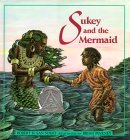
For something meatier (and, uh, in print), try the multicultural mermaid story
SUKEY AND THE MERMAID by Robert D. San Souci, illustrated by Brian Pinkney (Simon and Schuster). And yes, yes, you can of course read Hans
Andersen's sorrowful saga of THE LITTLE MERMAID, (just get a beautiful version like Lizbeth Zwerger's; please avoid the Disney version, which I always felt made her look like such a little sea-hussy instead of the complicated young woman that she was).

Your intermediate mer-children may enjoy some time to loll about in their tails and dipping into chapter books that all feature half-fish, such as the following:
ISLAND OF THE AUNTS by Eva Ibbotson (Penguin)(9 and up)
THE TALE OF EMILY WINDSNAP by Liz Kessler (Candlewick)(8 and up)
THE FISH IN ROOM 11 by Heather Dyer (Scholastic) (8 and up) (A nice modern fish tale in an apartment building that will appeal to boys as well)
THE FOLK KEEPER by Franny Billingsley (Simon and Schuster) (All right, the main character is more like a Selkie, but that's close, right?) (11 and up)
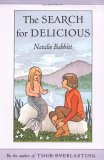
THE SEARCH FOR DELICIOUS by Natalie Babbitt (Farrar Straus Giroux) (9 and up, but you really must read this one aloud to your whole family!)
THE ANIMAL FAMILY by Randall Jarrell, illustrated by Maurice Sendak (Harper) (10 and up; I read this haunting love story between a hunter, a mermaid and a bear when I was a child, and it has stayed with me my whole life. Luckily, this is one mermaid story that stayed in print.)
And, perfect timing, MERMAID SUMMER by Mollie Hunter (Harper) (10 and up, featuring one mighty fresh half-fish).


Links are provided for informational use. When buying new books, don't forget to support your local independent bookseller.

Wednesday, July 26, 2006

BEACH BLANKET READING #3: UNDER THE SEA and DEAR FISH

The sun continues to shine high and hot in the sky, and here at PlanetEsme, we are still on the beach!

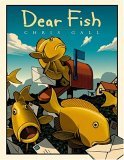
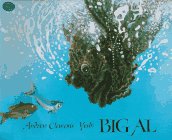
Read fishy stories like the magnificent BIG AL by Andrew Clements, illustrated by Yoshi (Simon and Schuster) about the biggest, scariest fish in the sea who would like nothing better than to make friends (4 and up, and boy how they scream if you say "The End!" after Big Al is caught in the net), SWIMMY by Leo Lionni (Knopf), the classic tale of undersea cooperation (4 and up), THE RAINBOW FISH by Marcus Pfister (North-South) about a vain and selfish little flipper who gets the zen-like (or is it Trump-like?) message from an octopus that you have to give in order to get (4 and up) and/or the brand-spanking new DEAR FISH by Chris Gall (Little, Brown) (6 and up). Uniquely and boldly illustrated with digitized clay engravings, it shows a world in which undersea creatures join us on land after recieving a message in a bottle from a little boy. The surreal imagination is akin to David Wiesner, and with nonfiction notes on the endpapers for reference and a hunt for ten fishy puns within these pages, there are plenty of hooks to catch young readers.

There are plenty of wonderful, water-ful crafts you can do with a fishy theme; an easy favorite of mine is a brightly crayoned seascape, painted over with turquoise watercolors. Never fails to get an "oooh-ahhh!" from the kids! Or, collage an under-the-sea-scene in a clean styrofoam meat tray, and then cover it with blue cellophane. For a fun game, let children design their own fish on posterboard. Cut them out and stick a little piece of magnet tape (sold at craft and office supply stores) on the back of each of them, along with a number from one to ten of the child's choice. Then, with a long stick with a string an magnet attached, let the children go "fishing." Who can score the most points after three tries? If you secure the fish in zip-lock bags, you can let kids "fish" in a wading pool! When the game is done, attach straws or craft sticks to the back of the fish with some tape, and they can double as puppets so children can make up their own fish tales.

Also of interest:
Okay, okay, I know some people are allergic to THE RAINBOW FISH, but if you cut out prismatic paper fins to pass out at the end of the story, it might help ease the discomfort. Also, check out the provocative article by Heidi Estrin about secular books that teach sectarian values, "Is the Rainbow Fish Jewish"? (Also available as a PDF if you search the title on Google).

Thanks to those who have been adding their own recommendations to these posts in the comments section, you know they are always welcome and appreciated!


Links are provided for informational use. Don't forget to support your local bookseller.

Tuesday, July 25, 2006

BEACH BLANKET READING #2: SEASIDE SCAVENGING

Today we continue our week's worth of seaside fun by playing in the sand!
Seaside Scavenger Hunt
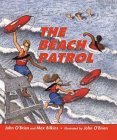
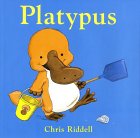
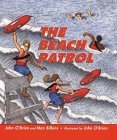
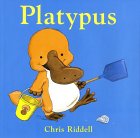
After reading PLATYPUS by Chris Riddell (Harcourt), in which our little hero goes beachcombing to find just the right addition to his collection, go on a scavenger hunt for items like a rock with a fossil on it, a bird feather, a shovel, a shell no bigger than a fingernail, or, any of the items from my very favorite piece of summery non-fiction, THE BEACH PATROL by John O'Brien and Max Bilkins (Henry Holt) (also a great choice for aspiring lifeguards ages 6 and up). If you're at home scavenging, try things like a slotted spoon, a penny from 1974, a book with a title starting with the letter B, or a yellow ponytail holder.
Also of interest:
BEACH DAY by Karen Roosa, illustrated by Maggie Smith (Clarion) (3 and up)
ALL YOU NEED FOR A BEACH by Alice Schertle, illustrated by Barbara Lavallee (Silver Whistle)(3 and up)
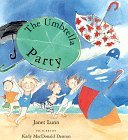
UMBRELLA PARTY by Janet Louise Swoboda Lunn, illustrated by Kady MacDonald Denton (Groundwood) (4 and up)
LOTTIE'S NEW BEACH TOWEL by Petra Mathers (Atheneum) (5 and up)

Castles in the Sand...and in the Jar
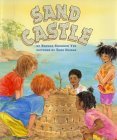
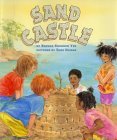
After reading SAND CASTLE by Brenda S. Yee, illustrated by Thea Kliros (Greenwillow) or SUPER SAND CASTLE SATURDAY by Stuart Murphy, illustrated by Julia Gorton (HarperTrophy), children can create their own sand art using craft sand, available through Oriental Trading Company (search keyword "sand") and craft stores. Using empty baby food jars or other clear containers, children can layer the colored sand to make beautiful sunset-like creations. If you have extra jars, you can make an "ocean in a bottle" by filling the jar halfway with water, adding blue food coloring, and filling it almost to the top with vegetable oil or mineral oil. After screwing the lid on tightly, move the jar back and forth to see the waves! If this floats your boat, there are tons of simple and delightful science activity tie-ins at Perpetualpreschool.com. Another fun sand activity is sand painting, instructions courtesy of one of my all-time favorite links, Thebestkidsbooksite.com.

Beach Ball Book Call
Play a literary game of toss: whoever catches the ball calls out the name of a book, and then throws it to someone else, who has to either name that book and another book, or the name of the author or illustrator that matches the book that was last called. Example: "The Hobbit!" (throws ball)
"The Hobbit, Judy Moody Saves the World!" (throws ball)
"The Hobbit, Judy Moody Saves the World, Captain Underpants!" (throws ball)
"The Hobbit, Judy Moody Saves the World, Captain Underpants, Dav Pilkey!" (throws ball)
"Tales of a Fourth Grade Nothing!" Since someone named the author of Captain Underpants, the list starts anew. How long can the list grow? How many authors or illustrators do the children know? You can also try to call out all books by one author; how many of Dr. Seuss's books can the children name? Lemony Snicket's? Beverly Cleary's?
Beach Mancala
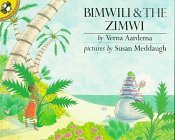
Mancala is an ancient game from Africa that is fun and easy to play on the beach using clamshells or small stones, and digging the "playing board" into the sand, using shells or stones as pieces, or by making your own board at home; they are also available relatively inexpensively at toy stores. Rules for playing mancala may be found here or here. Once you know how, it's absolutely addictive; you'll never play checkers again! You may want to include a reading from Verna Aardema's retelling of the African folktale set at the beach, BIMWILI AND THE ZIMWI (Penguin) (which may be a bit scary for younger children, but suspenseful for some; read it yourself and decide!). In the brilliant storytime resource book I'M A LITTLE TEAPOT! by Jane Cobb (Black Sheep Press), the author suggests taking a conch shell after reading Bimwili and letting all the children listen to it, and then using the story as a springboard for examining all different kinds of shells (a great chance to incorporate guide books!).

Footprint in the Sand Bookmark

For a keepsake of this sunny, funny day, let each child trace a foot on a piece of thin sandpaper (available in sheets or rolls at hardware and home improvement stores) and cut it out. Punch a hole and tie on some raffia and a seashell with a hole in it to complete a beachy bookmark!

Links are provided for informational use. Don't forget to support your local bookseller.

Monday, July 24, 2006

BEACH (PICTURE BOOK) and BEACH BLANKET READ-ALOUDS

PICTURE BOOK
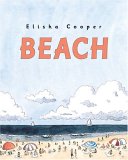
BEACH by Elisha Cooper (Orchard)
"Away to the beach! Away to sand and salt water, to rolling dunes and pounding waves. Away to swimsuits and sunscreen, to lying on towels and listening to the sound of the ocean. As the day begins, the beach is empty waiting to be filled." So this wonderful book welcomes us, and we feel the white, waiting blank page behind every quick-sketch watercolor, a sketchbook lovingly, urgently filled in, trying to capture every small shell and crab claw, every splash and cloud, the bend of every sunbather's knee and wrap of towel. Fast, faceless but form-filled studies against vast white backgrounds create focus, and this illustration style is a great tool for art teachers to teach children (and aspiring illustrators) how to look, really look at something. I enjoyed Cooper's droll ode to a lazy cat, MAGIC THINKS BIG (Greenwillow) published in 2004, but this latest offering really kicks it up a notch. This book was so hot it made me want to put on sunscreen. I hope it will not be overlooked for Caldecott consideration. (5 and up)

Also of interest:
With a heat wave sweeping across the country, I think it's time we hit the beach
(bikinis optional, thank goodness)! All week long we're going to get wet and wild in bibliophile-style via recommendations and crafts suitable to the season. For those of us lucky to live close to an ocean or lake, reading can be held along the shoreline, but folks without such a luxury can still enjoy reading without the harmful UV rays! Break out the beach blankets, big umbrellas and sunglasses to create a big splash, even if it's just spread out across the living room floor or alongside a wading pool in a backyard.
Remember, if you do take books to the beach, you may want to put them in gallon-size ziplock bags to keep them in good condition.

Here are a few titles to tuck in your beach tote:

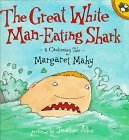
THE GREAT WHITE MAN-EATING SHARK: A CAUTIONARY TALE by Margaret Mahy, illustrated by Jonathan Allen (Penguin) (5 and up)

HOW WILL WE GET TO THE BEACH? by Brigitte Luciani, Eve Tharlet (NorthSouth)(3 and up)

MAISY GOES SWIMMING by Lucy Cousins (Candlewick)(3 and up)

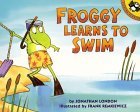
FROGGY LEARNS TO SWIM by Jonathan London, illustrated by Frank Remkiewicz (Penguin)(4 and up)

DOWN TO THE SEA WITH MR. MAGEE by the retro-fabulous Chris Van Dusen (Chronicle)(5 and up)

THE OWL AND THE PUSSYCAT by Edward Lear, illustrated by Jan Brett (Penguin)(some gorgeous Carribean beach artwork!)(4 and up)

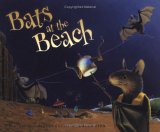
And another new one, a New York Times bestseller offering up what happens on the sand after the sun goes down: BATS AT THE BEACH by Brian Lies (Houghton Mifflin)(5 and up)

Hold on to your hats and visors, there's more to come!


Links are provided for informational use. Don't forget to support your local bookseller.
Friday, July 21, 2006

ASK ESME #2 and CHARLIE COOK'S FAVORITE BOOK (PICTURE BOOK)

Dear Esme,

I have a question! I've recently started working in a suburban public library. The branches are staffed mostly by associates - no librarians trained in or dedicated to helping children. My concern: Our customers, young and old, are really culturally diverse - but one thing most have in common is that they don't know how to browse. How do I teach them to find "something that looks good" on a shelf?

I've come up with several possibilities for the inhibition (they're polite, afraid to touch, or overwhelmed by choice) as well as several impossibilities (they're ignorant, bookphobic, or hopeless).

Solutions? 1) I've considered creating a brief scavenger hunt. Like, "Let's find the biggest book on this shelf. The smallest. The prettiest/ugliest. A book for a boy/girl. A book with pictures/no pictures inside. A red/blue/green book." SOMETHING that would get them looking at the trees instead of the forest and encourage them to interact with the books. Unfortunately, though, I don't usually have the luxury of spending enough one-on-one time to do this.

2) In a pinch, I've also tried the quick-and-dirty option often recommended for feeding or dressing toddlers. I pick up 2 books, smile big, and say, "Which of these would you rather read?" But this is more coercive than reader's advisory is probably supposed to be, and I've only done it when Mom/Dad requires a choice and the clock is ticking.

SO: Is there a 30-second solution? How can I encourage a roving reader? Everybody has preferences - how do these translate into considering books?

Thanks!
EJ, Atlanta

P.S. I'm really enjoying your blog!

Dear Gentle Reader,

First of all, kudos to you for the work you do and the efforts you have made. In all walks and strata of life, people are largely unenlightened in regard to the riches of reading, and uninformed as to the protocol that would allow them to make the most of this amazing resource that is the library, creating the special challenge that you describe. I describe a motivation theory, a five-finger test, how to keep book-leveling in perpsective and other things of interest in HOW TO GET YOUR CHILD TO LOVE READING (available at your local library! And will turn your associates into experts), but today I'll focus on a more immediate solution that speaks directly to your needs.

I think your possibilities are insightful, especially the feeling of being overwhelmed. I have often compared being faced with a wall of unfamiliar books as similar to being handed an extensive menu of some exotic, foreign cuisine. You know something on that menu is good, possibly delicious. But how can you choose when you aren't even sure what you're choosing? Maybe you'll order something divine, a delicacy that suits your unique palate! Or, just maybe, you'll unsuspectingly pick something from a part of the animal that shall go unnamed. It's enough to stop anyone in their tracks.

A patron may be set back in motion when they are reminded that they don't have to be so invested in any one choice. I think one approach that you, as professional book-sharer may find helpful is to remember that these are not just patrons but consumers, and, if they are American, they are likely very fervent consumers in other areas of life. I suggest you play into that role, where they may have more confidence. If at all possible, acquire tote baskets from a library supply company like Demco (search using the word "basket," and you'll find browsing baskets, tote baskets and better baskets, all of which are suitable). What this does is suggest to the patron, "take all that you can carry!" Since there are many other "shopping" situations in which the patron may be more familiar or comfortable, they may naturally get the idea that taking more than one book is the norm (children certainly get the hint!), and this is extremely important if they are ever to become avid consumers of books. By choosing books with abandon, they will encounter titles that they might not like as much as they thought they would. This is a good and natural thing: they can develop their own criteria and also see that it's okay, we don't have to choose the perfect book every time, and that indeed they are not expected to judge a book completely by its cover. Choosing more books also means they have a higher chance of encountering books that they do enjoy, and that, of course, will keep them coming back.

The other thing you can subtly (or not so subtly) suggest to the patron is that the shopping spree scanario: if you could go into a store and you could choose anything you'd like, would you really just choose one single thing, or would you go crazy? At the library, hey, it's an endless spree! A library card is like a credit card with no interest rate except maybe overdue fines, and no annual fee, and everything you get with it is free, free, free...as long as you bring it back after a week or two. Work it, patron!

Though it may feel gauche at first making such avaricious comparisons, just remember: for a number of people, books were encountered first (and sometimes only) through the formality of schools. It takes a lot to move folks out of the mindset of books as props in an intellectual setting (to paraphrase from Auntie Mame, "books are sooo decorative!") into reading as part of a lifestyle with which they can identify.

Love,
Esme

Does anyone have other ideas and suggestions for the author of this letter? I know there are more. Please do share in our comments section. And if you have a question, please e-mail it with the subject heading "Ask Esme" to esmeatripcodotcom. Though I may not answer every question, you know that over time, I'll try!

And for our book-of-the-day, run to the library and check out
PICTURE BOOK
CHARLIE COOK'S FAVORITE BOOK by Julia Donaldson, illustrated by Axel Scheffler (Dial), a story within a story within a story, in which the choices made by an enthusiastic reader are revealed through samples of stories (pirates, dragons, fairy tales, nonfiction, joke books, science fiction, mystery...) seamlessly interlocked with the turning of every page, and brought together in the endpapers, where we see all of the volumes lined up on the shelf. A cheerful book that does offer a dynamic sampling of what adventures may be found as an armchair traveler. (5 and up)

Links are provided for informational use. Don't forget to support your local bookseller.

Thursday, July 20, 2006

LITTLE SAP AND MONSIEUR RODIN (HISTORICAL FICTION)

HISTORICAL FICTION
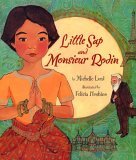
LITTLE SAP AND MONSIEUR RODIN
by Michelle Lord, illustrated by Felicia Hoshino (Lee & Low)

Rather than revolving around the Parisian artist Auguste Rodin, the author cleverly focuses the story on the Cambodian country girl who joins the King’s dance troupe in order to give her family a better status in their village. Her training, homesickness, artistic development and ultimate meeting with the artist who would immortalize her in his sketches make for a very compelling framework and well-developed character. A delightful pick for young ballet students who might be interested in this unique form of dance in which girls mimic the forms of the ancient Khmer Asparas, or “heavenly dancers.” Don’t let the spare text or illustrations fool you; this is a very accomplished coming of age story. (7 and up)

Also of interest:
For more great artist-meets-kid stories, check out
BEETHOVEN LIVES UPSTAIRS by Barbara Nichol, illustrated by Scott Cameron (Scholastic) (8 and up)
KITTY AND MR. KIPLING: NEIGHBORS IN VERMONT by Lenore and Eric Blegvad (McElderry) (8 and up)
UNCLE ANDY: A FAABBBULOUS VISIT WITH ANDY WARHOL by James Warhola (Putnam) (6 and up)

And take a closer look:
MASTERPIECES UP CLOSE by Claire D'Harcourt (Chronicle) Over twenty paintings are reproduced in oversized format, with an invitation to scavenger-hunt for details; kind of an epicurean
Where's Waldo that will inspire close inspection of great works of art.

Links are provided for informational use. Don't forget to support your local bookseller.

Wednesday, July 19, 2006

MERLIN AND THE MAKING OF THE KING (FICTION)


FICTION
MERLIN AND THE MAKING OF THE KING
by Margaret Hodges, illustrated by Trina Schart Hyman (Holiday House)

In the business of children's literature, there are two big seasons: spring/summer and fall/winter. And here is a term within the industry: a "window," or an all-too-short period of time in which a book is given publicity attention before the publisher begins to focus on the books in the next season. With the competition of thousands of new children's books released annually and publicity budgets and talents varying greatly, it's only natural some titles fall under the radar. With that in mind, though I will continue my ever-vigilant up-periscope on the brand-spanking new, every now and then I'd like to mention a contemporary book that may not be out just five minutes ago, but that is so wonderful I'd like to make sure you know about it. This is such a book.

Trina Schart Hyman, winner of the Caldecott award and honors many times over, passed away in 2004, a tremendous loss for the children's book community and book lovers everywhere. Her graceful line was inimitable, and she redefined the illustrated fairy tale through the use of borders and windows through which children could safely view fantastic worlds of imagination. It is only fitting that the last work published in the lifetime of such a legend would be a legend. Eloquently adapted from Sir Thomas Malory's Le Morte d'Arthur, this retelling does not dumb down the Arthurian tales, but makes them short and accessible enough to read aloud in a classroom or at bedtime. This award-winning team succeeds again, the golden-tongued prose of "The Sword in the Stone," "Excalibur," and "The Lady of the Lake" entwined by creeping vines that frame gilded scenes of passion, loss and glory from the days of brave knights and fair damsels. Use this elegant tome to introduce children to some of the most enduring characters in history and literature. Fit for a king (and for a child, too). (7 and up)

Also of interest:
CHANGING WOMAN AND HER SISTERS: STORIES OF GODDESSES FROM AROUND THE WORLD by Katrin Hyman Tchana, illustrated by Trina Schart Hyman (Holiday House)
This title casts a broad and enlightening multicultural net, capturing the spirits of many spellbinding female spirits...be forewarned, though, for all this book's allure, I found the stories in this collection, retold by her daughter, to be a little on the Grimm side for the average read-aloud. However, published post mortem, it is an important book is the consideration of the artist. It employs a breathtaking collage technique that was a departure for her, using photographs makes you look twice to see if you really saw what you think you saw. (10 and up) If you are looking for some amazing girl-power stories, you should definitely treat yourself to TATTERHOOD AND OTHER TALES
edited by Ethel Johnston Phelps, illustrated by Pamela Baldwin Ford (The Feminist Press at CUNY). Though the illustrations are far more understated, the storytelling speaks in a thousand pictures. (10 and up)

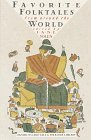
Okay, and if we're going down that street, would you please treat yourself to Jane Yolen's amazing, FAVORITE FOLKTALES FROM AROUND THE WORLD(Pantheon)?At five-hundred-some pages, it's a
chef doerve of research and retelling. This education-in-a-book is a must-have resource for teachers, storytellers, and fans of Andrew Lang's BLUE FAIRY BOOK. Good grief, it's like getting a box of chocolates with four layers!

On a personal note
To my wonderful husband, Jim Pollock, I hope you had a happy, happy birthday. I wish you many more, and that all of your dreams come true.


Links are provided for informational use. Don't forget to support your local bookseller.

Tuesday, July 18, 2006

THE FRIENDLY FOUR (POETRY)

POETRY
THE FRIENDLY FOUR by Eloise Greenfield, illustrated by Jan Spivey Gilchrist (HarperCollins)
If I could choose just one adjective to describe this book, it would be "playful." Here, the spirit of children is celebrated: the ability to find each other, to make friends, to invent worlds. The story of a summer spent together is told in four voices, color-coded for read-aloud, so each emergent reader in a small group can take a part (though it can also be read by a single talented adult). Though these children clearly have big things going on at home (it is suggested that one lives with her grandmother, one is in foster care, and one is in the neighborhood while her mother recovers from an illness), they are upbeat and undeterred from their imaginative lives, filled with tall tales, playground days and adventures in the town of "Goodsummer," an idyllic place invented out of paper and paint. In snapshots, we see their days both languid and lively, such as an afternoon covering eyes at a scary monster movie: "That was a great movie./That monster was mean!/That was the best movie/I have ever not seen." Or perhaps a punishment for going out of bounds: "The grown-ups had told us not to travel/beyond the corner tree./ When they looked, they couldn't find us,/now we're punished to remind us/not to forget to remember/where we're supposed to be."

Though I know this book is classified as "poetry," it really does read more like poetic prose to me, as the rhymes are often internal or incidental. What is consistent is the jouncy, hopeful tone, full of eagerness to make a perfect summer day and friendships that last, well matched by colorful, ebullient illustrations. Though Ms. Greenfield would be hard-pressed to beat her collection of poems HONEY I LOVE (illustrated by the absolutely inimitable Leo and Diane Dillon), this book is a fresh pleasure from a classic talent. (6 and up)

Also of interest:
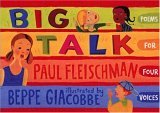
Check out the master of poetry for many voices, Paul Fleischman!:
BIG TALK illustrated by Beppe Giacobbe (Candlewick) (7 and up), Newbery award winning JOYFUL NOISE illustrated by Eric Beddows (Harper) (8 and up), and ZAP: A PLAY (Candlewick)(12 and up).

Links are provided for informational use. Don't forget to support your local bookseller.


Monday, July 17, 2006

LIBRARY LION (PICTURE BOOK)

PICTURE BOOK
LIBRARY LION by Michelle Knudsen, illustrated by Kevin Hawkes(Candlewick)
There are some books you like and some books you just love, L-O-V-E, the kind of book that makes a school librarian's heart beat faster and count the days until September...and this is one of them. This wonderful story is the account of a lion who wanders into the library and is actually an ideal patron, once he learns that loud roaring is against the rules. When uber-librarian Miss Merriweather takes a tumble from her step-stool and all demure Lassie-like attempts to get help by the lion fail, he resorts to rule-breaking, offending an anti-lion administrator who has been waiting for just such an occasion to banish our hero. Will he ever be invited to the library again?

Miss Merriweather steals the show with her unrelenting references to the library rules even in the most dire circumstances. Hawkes' gentle pencil and watercolor illustrations are sweet perfection, funny and expressive. Not since Maurice Sendak's PIERRE have we encountered a more forgivable feline! And if you have ever wondered why there are lions in front of libraries, this book offers a fine (albeit fictional) answer (more info about the lions in front of the New York Public Library by clicking here). Teachers and librarians can use this book as a tool for discussing and developing rules at the start of the school year, and anyone can use this book as an example of delightful storytelling and what a children's book should be. (5 and up)

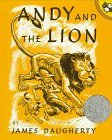
For a full-fledged storytime, combine with DANDELION by Don Freeman (author also of the classic CORDUROY, both published by Penguin), about the lion who learns the hard way that he need only be himself to recieve an invitation to an exclusive tea-and-taffy party (4 and up), and the Caldecott-honor winning ANDY AND THE LION by James Daugherty (Penguin), a down-home spin on Androlocles in which a boy removes a thorn from a lion's paw and saves the day at the circus, all thanks to a library book about lions. (This book is special in my heart, because I remember a particular fifth grade boy who loved my copy of this book so much that he carried it around until it was literally ragged and I had to get him his own copy to love.) (5 and up)

Also of interest:
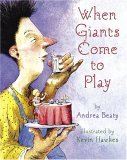
I have felt for a long time that Kevin Hawkes was due for some Caldecott attention, and if he doesn't get a nod this year between LIBRARY LION and the charming WHEN GIANTS COME TO PLAY by first-time author Andrea Beaty (Abrams)(4 and up), I just don't know what! By the way, if you read this book aloud, for a treat you can serve tea and giant rings (doughnuts) afterwards. It is also a great picture-book preface to Roald Dahl's THE BFG or Julia Donaldson's THE GIANTS AND THE JONESES (which I strongly recommended a few blog entries back, I certainly hope you listened to me).

Links are provided for informational use. Don't forget to support your local bookseller.

Friday, July 14, 2006

HOW WE ARE SMART (NONFICTION)

PICTURE BOOK/NONFICTION
HOW WE ARE SMART by W. Nikola-Lisa, illustrated by Sean Qualls (Lee and Low)

Being smart can be about more than doing well in school. Using Dr. Howard Gardener's multiple intelligence theory, the author celebrates the many ways that people can be smart: body smart, logic smart, music smart, nature smart, people smart, picture smart, self smart and word smart. Each kind of smart is exemplified in a short biographical portrait containing a quote from a notable individual , a poem, and a paragraph-long description of the subject's life and accomplishments. At the end of each passage, the author invites the reader to ask, "Are you like...?" and they will be eager to compare themselves to this decidedly multicultural "who's who," containing such effervescent talents as scientist Ynés Mexia, architect I.M. Pei, Explorer Matthew Henson, musician Tito Puente, among others, a shining dozen all together.

Besides serving as a very nifty book of biographical introductions, it will do so much to help children value whatever kind of smart that they are, and will remind adults of the special and varied gifts every child has, just waiting to be unwrapped. Be book smart and add this inspiring addition to your collection, and the excellent backmatter including resources and activities make this a must-have for progressive teachers and homeschoolers. (8 and up)

Speaking of must-have, if your school has a budget for guest authors you must have this author, W. Nikola-Lisa! I will never forget the rainy afternoon he spent at the PlanetEsme Bookroom, in which he entranced a roomful of people for a timeless hour, reading not only his own books but the books of many others. He played music and cast everyone under such a charismatic, magical bookloving spell that we had to wonder, "television? What's that?" Truly, for his special gifts of not only writing fine books but getting folks to love reading, this man is a national treasure.

Look at this guy! Clearly, he knows what kids like.

Links are provided for informational use. Don't forget to support your local bookseller.

Thursday, July 13, 2006

ASK ESME #1: WHEN KIDS WANT REAL MAGIC

Dear Madame Esme,
My 10-yr-old son is very particular about the books he loves. Since his favorite genre is fantasy and I don’t read much of that at all, I’m of little use in recommending books to him. All fantasy looks alike to me. But my son is more discerning. He likes fantasies that happen in the real world. Is there a word or category for that? He loves the idea that magic or fantasy can happen to real people, like him! His favorites are Harry Potter and the Animorphs. He also already read all the Narnia books. He has also read and enjoyed Edward Eager and some of Bruce Coville. And to explain further, a book he couldn’t get into (no matter how good it is) was THE WALL AND THE WING because the whole book is fantasy. There isn’t a real world that bridges to the fantastical world. What should I recommend for him next? Thanks for your advice! Love your blog! And love you, too!

Signed,
A Madame Esme Groupie


Dear Gentle Reader,
The closest term that some might use for what you desribe is one borne of a more cinematic origin, "magical realism," in which a realistic story has surprising, surreal elements; but even that label suggests a kind of acceptance of magic as part of the way things are. It sounds like your son likes books in which the characters are just as surprised as he would be about a magical turn of events! It's only natural, as intermediate children conquer so much of the concrete world, they hold fast to the hope that something amazing...unexpected...impossible can happen. Luckily, this hope is often embraced and celebrated in children's literature. So you have the kind of kid who climbs into wardrobes or tries to feel his way through to the other side of a looking glass, check out these oldies but goodies (9 and up):

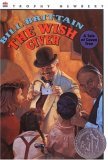
THE WISH GIVER by Bill Brittain (HarperTrophy)
When a strange little man sets up a tent at a county fair, four everyday folks spend fifty cents to make their wishes come true, exactly as they ask for them...and irrevocably. This cliffhanging fantasy is one of my very favorite read-alouds of all time!

THE LAST OF THE REALLY GREAT WHANGDOODLES by Julie Andrews Edwards (HarperTrophy)
A professor leads children to Whangdoodleland in search of an endangered species. Fans of Narnia will get a kick out of this imaginative offering, written by the famous actress before celebrity books were the norm (and before they were so dadgum awful).

JEREMY THATCHER, DRAGON HATCHER by Bruce Coville (Harcourt)
Though you mentioned your son already liked Bruce Coville, I wanted to make sure you are acquainted with this prolific talent's "Magic Shop" series. In this book, a strange egg bought at a magic shop produces unusual offspring. The first book in the series, THE MONSTER'S RING, is a bit spooky, so for some, JEREMY THATCHER is a more subtle, magical entryway. Coville has a knack for the goosebump as well as the funny bone, and has female protagonists in his casts; check out JULIET DOVE, QUEEN OF LOVE.

MOLLY MOON'S INCREDIBLE BOOK OF HYPNOTISM by Georgia Byng (HarperTrophy)
A homely, unpopular orphan gets her hands on a powerful library book, and then, look out world! Unfortunately, a criminal genius is hot on her heels, looking to do more than borrow the precious tome. Snarky voice and breakneck action will make the reader anything but sleeeeepy.

THE CASTLE IN THE ATTIC by Elizabeth Winthrop (Holiday House)
A boy uses a magical playset in his attic as a means to try and keep his beloved nanny in the family, whether she wants to be or not. With carefully drawn and often powerful characterization, this is a contemporary to Lynne Reid Bank's popular INDIAN IN THE CUPBOARD, also about toys that come to life.

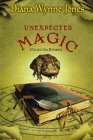
UNEXPECTED MAGIC: COLLECTED STORIES by Diana Wynne Jones (Greenwillow)
Fifteen stories about people who encounter magic in everyday situations provide an introduction to the work of this widely loved fantasy author. (11 and up)

Of course, there are many more wonderful titles... Andrew Clements' THINGS NOT SEEN, Jane Langton's THE FLEDGLING, or Natalie Babbit's immortal TUCK EVERLASTING...readers, chime in with your favorites in the "comments" section!

Hope these titles help your son, and many other children, have a magical summer of reading.

Love,
Madame Esme

Also of interest:
If you enjoyed this "Ask Esme" feature, you'll find many more examples of the reading advice column in HOW TO GET YOUR CHILD TO LOVE READING. I'll try to answer about a question a week here on the blog; please submit your stumpers to esmeatripcodotcom, with the subject heading "Ask Esme". Though I can't promise to answer every question, you know I'll try!

Links are provided for informational use. Don't forget to support your local bookseller.

Wednesday, July 12, 2006

ONCE I ATE A PIE (POETRY)


PICTURE BOOK/POETRY
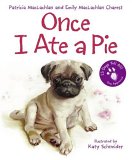
ONCE I ATE A PIE by Patricia MacLachlan and Emily MacLachlan Charest, illustrated by Katy Schneider (HarperCollins)
I swear to you, I am not just recommending this book because I fell under the hypnotic spell of the puggy puppy-dog eyes on the cover (at least, not only because of that). Fourteen free-verse poems capture all the enigmatic, indulgent and sometimes maddening qualities of kid's best friend. Take the small, appreciative phrasing in "Lucy," for example:

I was adopted from a shelter.
I love the couch. It is mine.
The chairs and bed are mine, too.
And the house.
At night I sleep between my owners.
They gave me a pillow of my own.
Mine.

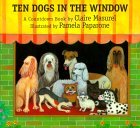
As was the case in the author's Newbery winner, SARAH, PLAIN AND TALL, she does an awful lot with a little, making every word count, and the text is further accentuated by varied typefaces. Live canine models served as the muses for the oil paintings that capture each dog's unique personality, and stand boldly out from stark white backgrounds. All in all, this is one sweet doggy treat. Pair with TEN DOGS IN A WINDOW by Claire Masurel, illustrated by Pamela Paparone (NorthSouth) for a storytime that will have listeners picking their favorites from the litter. (5 and up)

Also of interest
Ummmm, you're kind of cheating if you read the above book and don't also check out the original charming canine confessional, LITTLE DOG POEMS by Kristine O'Connell George, illustrated by June Otani (Clarion). Did you know that this author also has one of the best poetry websites around?

Links are provided for informational use. Don't forget to support your local bookseller.

Tuesday, July 11, 2006

HOW TO BE (PICTURE BOOK)


PICTURE BOOK
HOW TO BE by Lisa Brown (HarperCollins)
It can be mighty tiring being a child all the time. How last Thursday! Perhaps a young reader or storytime listener would prefer to try on a different skin. How to be a snake? "Shed your skin./Slither./Dance in a basket./Be charming." How about a bear? "Catch fish with your hands./ Hibernate./Growl./Be brave." After a few animals, perhaps humanity will regain its appeal, in which case How to Be a Person is proffered, taking all the best qualities of the animal kingdom into account. I guess it's something we must build up to!

Spare, expressive line-drawing illustrations leave plenty of room for imagination; besides acting out every page, children will enjoy creating their own sets of poetic instructions for things that need being. Playful and child-centered, with the winsomeness of Ruth Kraus and Maurice Sendak's early collaborations and the offhanded, natural wit of Karla Kuskin, Lisa Brown has shown that she certainly knows How to Be an Author/Illustrator. (4 and up)

On a personal note:
I was surfing without success for this Lisa Brown's website, but instead came across a fairly fabulous website of another, different, and unfortunately demised Lisa Brown who was also an artist (albeit Keith-Haring-ish and of a decidedly more adult nature, but hey, we can be grown-ups for a minute here, I guess). So! If you are pregnant and looking for a name for a daughter, have you considered Lisa Brown? It seems that women with this moniker are beautiful and have creative tendencies.

Here is a picture of the children's author Lisa Brown.
Isn't she so pretty and friendly-looking? Just like her book.


Links are provided for informational use. Don't forget to support your local bookseller.

Monday, July 10, 2006

THE SECRET KEEPER (PICTURE BOOK)

PICTURE BOOK
THE SECRET KEEPER by Kate Coombs, Heather M. Solomon (Atheneum)
Kalli is the secret-keeper of Maldinga. Each time a townsperson shares one of their shameful little confessions, a trinket unique to that secret appears in the palm of Kalli's hand, which she then stores in one of the many tiny drawers that line her cottage walls. When winter comes, though, Kalli falls ill, and the townspeople despair at the thought of losing her. Does the village potter have the secret that will get her out of bed? A poignant message about the weight and relief we impose upon one another by what we choose to share is at the heart of this story. Great for sharing with older children, reading this imaginative folktale is like watching a series of magic tricks. Don’t keep this one a secret. (7 and up)

Also of interest:
If you like this book, you will also enjoy The Quiltmaker's Gift by Jeff Brumbeau, illustrated by Gail De Marcken (Scholastic), a sumptuously illustrated parable in which a quiltmaker designs a beautiful blanky to cover a greedy king's behind. (6 and up)

Please share your favorite picture books that you've found to be good with older children in the comments section!

Links are provided for informational use. Don't forget to support your local bookseller.

Friday, July 07, 2006

TEAM MOON (NONFICTION)

NONFICTION
TEAM MOON: HOW 400,000 PEOPLE LANDED APOLLO 11 ON THE MOON by Catherine Thimmesh (Houghton Mifflin)
If it takes a village to raise a child, it apparently takes a city to raise a spaceship. Who will sew the space suits? Who will transmit the broadcast from two hundred fourty thousand miles away so everyone can watch it on television? Who will decontaminate the film that the astronauts bring back from the moon? Who will engineer the parachute system? Who will determine the cause of that infernal beeping as the lunar module approaches the moon's surface with less than sixty seconds' worth of fuel? Via a variety of real-life voices as well as Thimmesh's own breathless narration, we see the precious baby of thousands of parents take its first steps in this appreciative account of man's first walk on the moon. This is an extraordinary non-fiction read-aloud, if you can manage with a catch in your throat and a tear in your eye. The book begins with the astronauts' obituary that thankfully never needed to be used, but that underscores the risks from the get-go. Divided into "challenges" instead of chapters and brought into even greater focus through a generous amount of photographs (many in color), the "Apollo spirit" of cooperation is stirring and inspirational history that bears repeating. In the words of NASA chief engineer Charlie Mars, "I think one of the things we had was a common goal; and we all realized that we were into something that was one of the few things in history that was going to stand out over the years. We're going to the moon! We're putting a man on the moon!" Go, team!!! (8 and up)

Also of interest:
It wouldn't be fair to mention this new book without suggesting other older ones that really belong in the collection of every child who dreams of adventure in the great blue beyond:
THE MAN WHO WENT TO THE FAR SIDE OF THE MOON: THE STORY OF APOLLO 11 ASTRONAUT MICHAEL COLLINS by Bea Uusma Schyffert (Chronicle). While Team Moon casts a wide net, this beautifully packaged little rocket of a book allows readers to travel along in the company of one man, Michael Collins, who went with Buzz Aldrin and Neil Armstrong, but had to stay in the ship while the others made footprints on the moon in 1969. Unique and eclectic scrapbook-style photographs and notes give this book a very intimate feel ("When you stand on the moon, you can cover the entire earth with your hand"), and includes forms, charts, lots and lots of drawings of buttons, really bringing readers along for every step of this interstellar ride. This foil-wrapped volume has as much "gimme that!" appeal to kids as those cool freeze-dried ice cream samples they sell in museum gift stores. Extremely accessible for independent reading as well as read-aloud. It contains all the excitement of space travel, as the Apollo did so many years ago .
(7 and up)

IF YOU DECIDE TO GO TO THE MOON by Faith Mcnulty, illustrated by Steven Kellogg (Scholastic) is your ticket to ride, as the first page suggests: "If you decide to go to the moon in your own rocket ship, read this book before you start." In an engaging second person voice, this book prepares the hopeful space explorer for the trip of a lifetime, from measuring deistance to the exciting countdown, to the feelings you will have as you shoot through the void, to the wightlessness in the cabin of your ship to the crater-filled landscape you will encounter upon landing. Kellogg is in the top of his form, his illustrations that make knowing use of poistive and negative space, sometimes busy and other times conveying the stillness and vastness of space. This book also subtly conveys the grace, fragility and richness of earth, our home, as seen from a distance. besides being a great non-fiction read-aloud, the reason you must have this book in your collection is because any child who reads it will feel as close as they can come to visiting the moon…at least, for a few years. (6 and up)

And for those still stuck on Earth, SPACE STATION MARS by Daniel Sans Souci (Tricycle)is a warm and funny picture book inspired by the author's boyhood attempts with his friends to contact aliens and the scientific explanation of the contact they do manage to make. Sure to inspire an industrious attempt from young readers. (6 and up)

In case the testosterone in these space books is running a little high, read BEYOND JUPITER: THE STORY OF PLANETARY ASTRONOMER HEIDI HAMMEL by Fred Bortz (Franklin Watts), a chance to vicariously meet one of the most exciting female planetary astronomers of our time. Full of color photographs attractively laid out, a timeline, glossary and further resources, this book is out of this world in every sense and a must-have for any girl with her head in the clouds and science in her future. (10 and up) See the amazing telescope on Hawaii that the author looked through as part of his research at the author's website!

Hope these picks give your collections a rocket-boost. Start a storytime by putting on your helmet and tell the kids to fasten your seat belts...you're going to the moon!

On a personal note
It was very interesting to read Team Moon so soon after finishing a re-read of Judith Kerr's WHEN HITLER STOLE PINK RABBIT (Putnam) and being in the middle of Markus Zusak's THE BOOK THIEF (which, incidentally, my instincts were right...it was originally published as a novel for adults in Australia). Such juxtapositions really makes a person wonder at the broadness of our collective imagination and curiosity, choices humankind makes can make as to where it devotes its energy. It's a marvel to consider and not to be underestimated, all of our potential to work together, for beauty and inspiration or for destruction, not just in 1939 or 1969, but right now, this very minute. Huh. What's it going to be?

On another personal note
Thanks to Heidi Estern for being so gentle with me during my very first interview for my upcoming book VIVE LA PARIS, about an African-American girl's friendship with a Holocaust survivor. The interview will be aired on the "Book of Life" podcast sometime this fall, but you really shouldn't wait that long to check out this wonderful show that you'll likely find every bit as pleasant and interesting as anything on NPR. The theme of this month's program is Jewish Life in America, but you don't have to be Jewish to enjoy it! Famous librarian (and action figure) Nancy Pearl is featured.

Furthermore, I'm feverish since I heard that also this fall, this podcast will be airing an interview with superb new author Brenda Ferber, pictured below at the PlanetEsme Bookroom signing copies of her extraordinary debut novel JULIA'S KITCHEN (for ages 10 and up) at our lovely "Great Women of Fiction" event. Once you start her story of a girl coming to terms with her loss after a tragic house fire, it will stick to your hand like glue, you simply won't be able to put it down; and trust me, you will always make sure your toaster is unplugged forevermore. Aspiring authors should definitely put it on their "must read" list; I learned so much about story arc just by her example. Though I love this picture of Brenda patiently signing books for a loooong line of admirers, you can see a much more fetching photograph on her website.

And one more personal note
Big thanks to all for the wonderful comments. Though I have trouble finding the time to respond individually, please know I really enjoy them and am encouraged by them, and that your expertise and experiences add so much to this blog.


Links are provided for informational use. Don't forget to support your local bookseller.

Thursday, July 06, 2006

WHAT MAKES A BOOK FOR CHILDREN? and THE GIANT AND THE JONESES (FICTION)


Johnny Gruelle, the creator of Raggedy Ann, created a criteria for his own writing:

"It is the Gruelle ideal that books for children should contain nothing to cause fright, suggest fear, glorify mischief, excuse malice or condone cruelty."

While I am not personally in complete agreement with his perameters (it excludes fairy tales which may cause fright but still speak to a very visceral part of childhood), Gruelle's "ideal" often enters my mind as I am considering a book for review, especially because of the interesting concept of the "book for children." What makes such a book?

Recently I have come across some books that I have greatly enjoyed or admired, but led me to wonder, why is this a children's book? I don't mean it as an accusation, but a real matter of inquiry. Books come to mind likeTHE POET SLAVE OF CUBA by Margarita Engle (Henry Holt), THE HOUSE OF THE SCORPION by Nancy Farmer (Atheneum), TIBET THROUGH THE RED BOX by Peter Sis (Farrar Straus and Giroux), A WREATH FOR EMMETT TILL by Marilyn Nelson (Houghton Mifflin), and my recent favorite, THE BOOK THIEF by Markus Zusak (Knopf). All of these titles are highly decorated with praise and even awards, and contain the kind of literary ingenuity and fearless content that take a reader's breath away and create new plateaus for writerly aspirations. These are the kind of books that make us feel smart for reading, for recognizing their value, for interpreting allusions and applying background knowledge and accomplishing all the cognitive acrobatics that are required to approach a real comprehension of what the artist is attempting. And yet, I can't help wondering, why are these considered and marketed as books for young people as opposed to just works of literature? The content and themes are so sophisticated. Where, in the process of creating these books, did the author or marketing department or buyers decide that the best audience for their content would be thirteen years old? Or is it all a moot point, as Dostoyevski probably didn't intend for C
rime and Punishment to be assigned reading for American high school students, let alone less receptive eighth graders?

I am trying to recall my own encounters with literature intended for adults as a child, and the impressions that they left. I know my mother read aloud to me stirring short fiction from Grace Paley's ENORMOUS CHANGES AT THE LAST MINUTE (Farrar Straus and Giroux) and her favorite articles from the New Yorker when I was a pre-teen, and I remember very clearly understanding that 1) New York was the center of the universe of all things sophisticated and elegant, and Chicago, where I lived, was only a crater-filled hard-working little moon that rotated admiringly, almost jealously, around it (an impression marred only slightly by the later discovery that New Yorkers put garbage out on their front sidewalks and are notably impatient in restaurants); 2) This grown-up reading was an "in," and if I paid attention very carefully, I could learn a little bit about the way that the world of grown-ups works. When my father shared THE ADVENTURES OF HUCKLEBERRY FINN and OLIVER TWIST and even when I took the long independent march through Arthur Miller's THE CRUCIBLE (which I only abided because I gathered that it was something about witches), whether or not these books were intended for me was not nearly as pressing an issue as what would happen next; after all, these not being "children's books," I knew no one had invented an obligatory happy ending on my account. Things could really go either way. How exciting!

And yet, for all the thrill of books intended for adults, for all the universal themes and unpredictable endings, they did not speak to me the way that the book about the boy traveling in the peach did. Or that girl who threw a shoe at the dog, and then had to make a replacement with paper and tape. Or the badger who foolishly traded away her hopes of a real china tea set. Or the family struggling with what to do about the crocodile in their bathtub. These books were meant for me, the way my parent's books were for them; they had authors who had me in mind, who were trying to imagine what I would like. Authors were kind, distant, faceless aunts and uncles trying to deliver to me the perfect gifts through their words and pictures: the promise that anything was possible, the friends I wished I had, the idea that problems could be solved by kids like me. These authors knew me well enough to know that pages of decription and a book without a laugh would not be tolerated, that things must Happen, and that I could smell a lesson as I could smell four-day-old fish, and likewise, would wrinkle my nose at it. I guess for me, one of the first thing I noticed about a true children's book was in the pacing; an author for children does not dare to expect that he or she will be indulged in any Proustian blather or pretention. For me, a true children's book needs to be honest and clear, and by honest, it should be funny in parts, because something that is never funny from start to finish is a lie.

But on the shelves bowed with books waiting to be bought, what makes a children's book is sometimes not honest or clear. The blurry line between children's books and art books or just plain literature or just plain cr*@! is partly market driven. Would
A Wreath for Emmett Till have found its readership had it been published in the adult poetry section? Would Tibet Through the Red Box have won awards as a coffee table book? Conversely, would a book like ALLEGRA MAUD GOLDMAN by Edith Konecky (Feminist Press), published twenty-five years ago, be marketed as a young adult (YA) novel today (and would it have a pink cover)? For that matter, would Huckleberry Finn be YA? Is it?

Another fuzz-factor seems to be our own modern propensity to insist that the context in which children read is often as a means of assessment: grades, reports, standardized tests, Accelerated Reader points. Hence, children are encouraged to move swiftly out of "baby" books. I think that when I was growing up, it was perfectly respectable for a child of seven to be seen reading a picture book; now, children seem acutely aware of what other their peers are reading, books are leveled and there is a drive to read "up." This is why it's very important to read a book before you share it with a child. Children may have the ability to decode the content of a book, but the themes and content in that same book may not be developmentally appropriate for that child to interpret independently. Additionally, this trend explains a precipitous division between picture books and chapter books, with less market support for strong, text-driven illustrated stories in between. Translation: What will become of the next William Steig?

Lastly, another factor to consider as to why its becoming increasingly hard to tell what books are really meant for children is that there is so much media available through television and the internet and other sources, and frankly, not that much attention is paid to such divisions...kids are already exposed to so much. Because of historical associations literature has to intellectual pursuits and education in general, books are often treated tomore stringent standards than other media. (I gotta love when a parent who has cable in the house complains noisily of a little sexual content or strong language on the page. Ha! Ha! Ha! Hypocrisy is always funny, in that moment right before it is sad.) Frankly, what bothers me more than the standard Puritanical to-don't list is the marked increase I've noticed of books with charming covers and dear illustrations that take a flippant tone when it comes to the way children speak to one another. Name-calling and put-downs are particularly rampant in books aimed at readers 7-11. Children, of course, really do call names, but the laws of physics should apply: for every action there is an equal and opposite reaction, and for every blow, there should be some pain, if we learned anything from Eleanor Estes' timeless novella THE HUNDRED DRESSES
(Harcourt)and from our own time spent on the playground. Certainly, pushing the envelope in terms of the way we treat others and the words we use and the number of times we use "poop" or underwear" are par for the childhood course, and, in fact, references to things that really make kids laugh or reflect the darker side of childhood can be considered groundbreaking in literature. But only when they are, in fact, groundbreaking. After a while, at best, it comes off as a little ingratiating. At worst, young readers are just plain manipulated into staring this mirror that reflects only the worst side of themselves, tittilated by the sheer recognition of something familiar or something taboo. Children's lit meets Madison Avenue.

I'm saying that as consumers,when we try to apply a modern "ideal" to what makes a children's book, these points are things which we ought to be aware. The world of children's literature is competitive, and inventive in its marketing; it's a shame that we can't always judge a book by its cover, because there are so many darn appealing covers out there. But as we work in the service of creating a new generation of readers, in whatever capacity that is, I think it is imperative that we differentiate excellence in books for children from books that impress adults; they are not always the same. I almost wish there was another genre within children's literature, the children's "art book," so that we could reward and celebrate the beauty of illustrated books and encourage bold experimentation by authors without dismissing others as facile, when really, they are speaking directly and genuinely to their intended audience. These quieter books, books that often don't receive the same media attention and sometimes require a bit of a hunt, are worth it.

But hey, enough musing-slash-ranting (unless, of course, you'd like to share your own thoughts in the comments section)! It's time for Book-a-Day, and it seems apropos to suggest a title that is really and truly written with a young audience in mind. I'm going to recommend it although it came out last year, because for some annoying reason it doesn't seem to be in every single collection yet. It's one of my favorite presents to give, and teachers, take note: I think this is the best fantasy read-aloud since Ruth Stiles Gannett's MY FATHER'S DRAGON.

FICTION
THE GIANTS AND THE JONESES by Julia Donaldson, illustrated by Greg Swearingen (Henry Holt)

Jumbeelia and Colette have a lot in common: they are both avid collectors, and they both tire of their collections fairly quickly. The big difference between them is just that: Jumbeelia is a giant, and she has finally found a magic bimplestock to climb down and collect some adorable igglyplops, or human beings…namely, Colette and her siblings! In this time of crisis the brother and sisters slowly begin to cooperate, but will it be in time to escape the dangerous clutches of callous brother Zab, the sharp claws of the spratchkin, or Jumbeelia's thoughtless neglect? Language arts teachers can luxuriate in the linguistic learning opportunities that this charming tale affords; invented Groilish vocabulary abounds and is the most fun since Lewis Carroll's Jabberwocky. With the help of a glossary, children will soon be bilingual in Giantese, and read-aloud has never felt so fresh and funny. Full of page-turning suspense, interesting problem-solving, themes of empathy and responsibility and distended spot illustrations that deliver us even further into fantasy, this reverse Jack and the Beanstalk has the makings of a classic in its own right. (7 and up)

Wednesday, July 05, 2006

MR. PUSSKINS (PICTURE BOOK)


PICTURE BOOK
MR. PUSSKINS: A LOVE STORY by Sam Lloyd (Atheneum)
Look at this face. That's what I think of when I think "cat": a big, puffy, ball of grouchiness. From arched eyebrows to wilted whiskers, you'll never have to guess what Mr. Pusskins has in mind. But like many fans of all things feline, Mr. Pusskin's owner Emily doesn't get the picture and is all snuggles and huggles. When she exclaims, "Oh, Mr. Pusskins! What a handsome boy you are! I do love you ever so much," all he hears is "blah-de blah, blah, blah." After a night of debauchery, however, Mr. Pusskins finds himself downcast and alone and oh so far from home. Will he ever have the chance to make it all up to Emily? Girl, he's nothing without you! Uh oh, fasten your seat belt...this book is like Kevin Henkes' KITTEN'S FIRST FULL MOON meets Jack Gantos' ROTTEN RALPH. (4 and up)

Also of interest:
THE STORY OF MRS. LOVEWRIGHT AND PURRLESS HER CAT
by Lore Segal, illustrated in top form by Paul Zelinsky (Athenuem). The polar opposite of Mr. Pusskin's story, we have here a warm and wonderful pet who is faced with the task of defrosting a chilly owner. (6 and up)

Links are provided for informational use. Don't forget to support your local bookseller.